Your reality show, watched 24/7,
ready for your live stream.
Painel Reality Live follows a reality show around the clock, detects what happens inside the house — fights, punishments, votes, challenges, alliances — and turns it into broadcast-ready graphics and briefings for creators who cover the show live. On our own channel, it does the work of a five-person team.
A real-time TV control room, run by a single person — built for OBS.
The problem
Reality shows run 24 hours a day, but a creator's live stream lasts one hour. Covering the show well means watching everything, remembering who voted for whom, tracking polls from a dozen sites and building graphics by hand — every single day. Small channels simply can't keep up with the big media outlets.
What it does
Watches the house
Reads the 24/7 transcription of the show feed and detects events: fights, punishments, votes, challenges, power cards and who left the game.
Keeps the facts straight
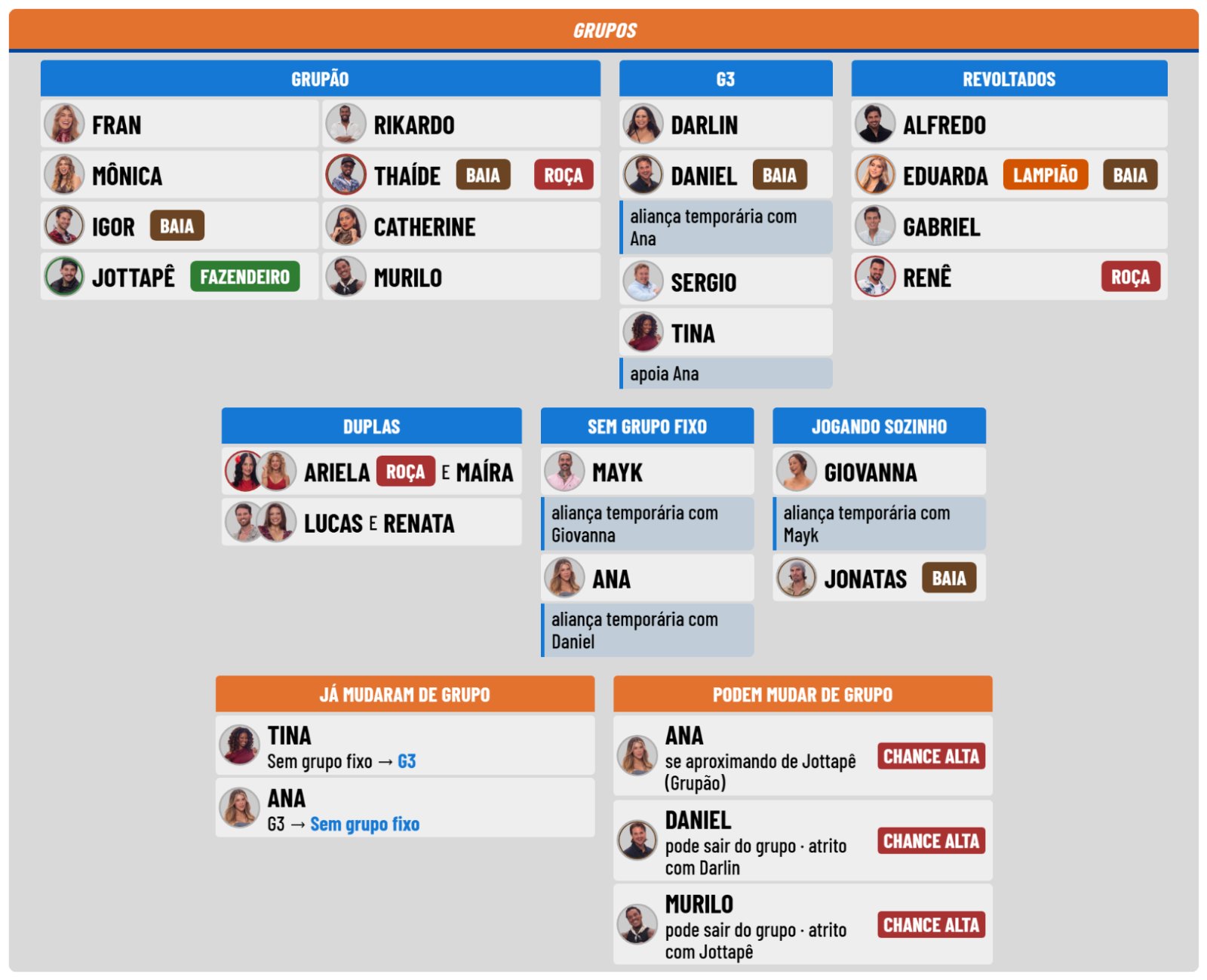
One record per week of who voted for whom, who is up for elimination, who holds immunity — so nothing wrong goes on air.
Predicts the week
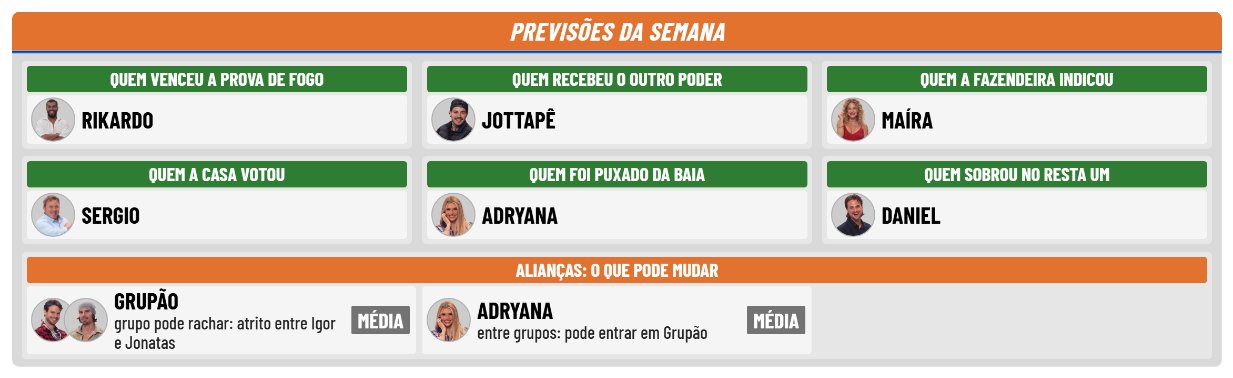
Combines what was said in the house with public polls to predict nominations and eliminations, and later shows honestly whether it got them right.
Puts it on air
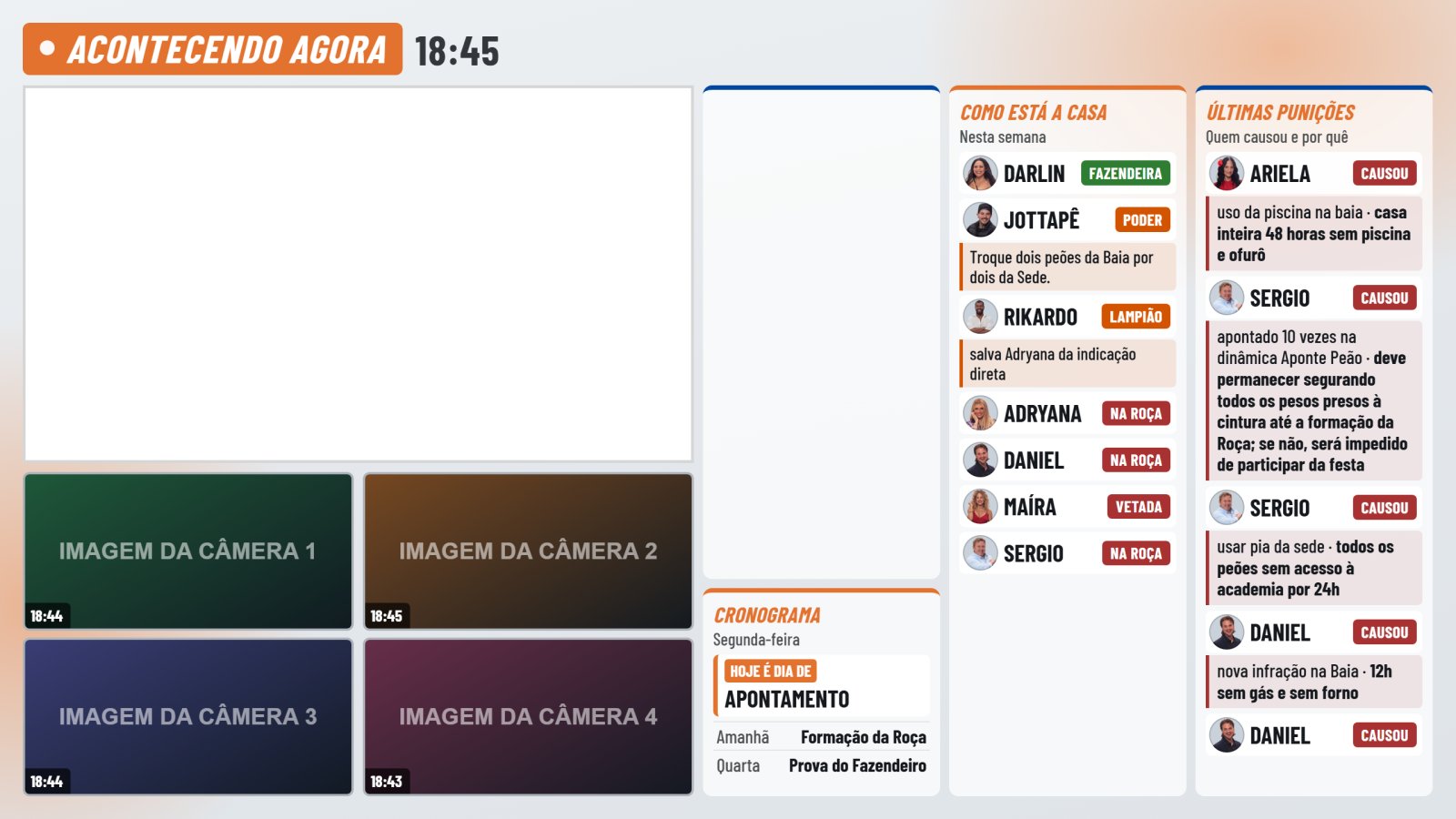
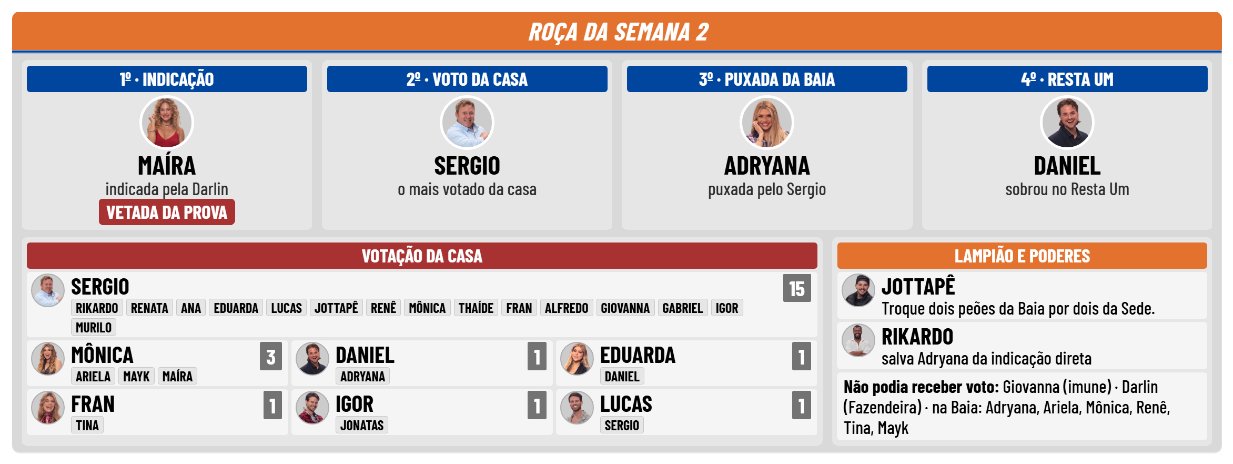
More than 20 graphics open as browser sources in OBS, controlled from a one-tap dock while the host is live.
Real screens
Who uses it
Today it runs every weekday on the live show of Casal das Notícias, a Brazilian channel covering the reality show A Fazenda (Record TV).
5 people
The work it does — watching the house, logging events, tracking polls and building graphics — would take a team of five. Today one host runs the whole show.
24 hours a day
It watches an entire reality show around the clock, every day of the season, with no shifts and no gaps.
Built to scale
The core — 24/7 transcription, event detection and on-air graphics — works for any reality show. A new show only needs its own rules; the same engine can follow several shows at once and serve many creators.
Next step: open it to other creators who cover reality shows, a growing niche on YouTube in Brazil.
Where Claude fits in
The product is built around language understanding. We are moving its AI layer to Claude, which will handle the core tasks:
- Event detection — reading hours of noisy transcription in Brazilian Portuguese and deciding what actually happened, who was involved and how important it is.
- Briefings for the host — short, accurate summaries of the last hours, ready to read on air.
- Reading poll screenshots — extracting names and percentages from images posted by poll sites.
- Fact checking — comparing news articles with what the house feed shows before anything goes on air.
Where it's going
Today it is a custom setup running on our own channel. The plan is to turn it into a product any streamer can install:
Monthly subscription
A paid app, billed monthly, that any creator covering a reality show can set up without writing code.
Stream Deck plugin
Every graphic and action on a physical Elgato Stream Deck button — one press puts it on air.
Made yours
Each user customizes colors, fonts, layouts and which screens go on air, so the graphics match their own channel.
How it works
- A processor transcribes the show feed around the clock and sends it to our server.
- The server detects events, updates the week's record and prepares predictions.
- The host opens a control dock in OBS and puts any graphic on air with one tap.
- A phone panel lets the team correct anything in seconds, even during the live show.